
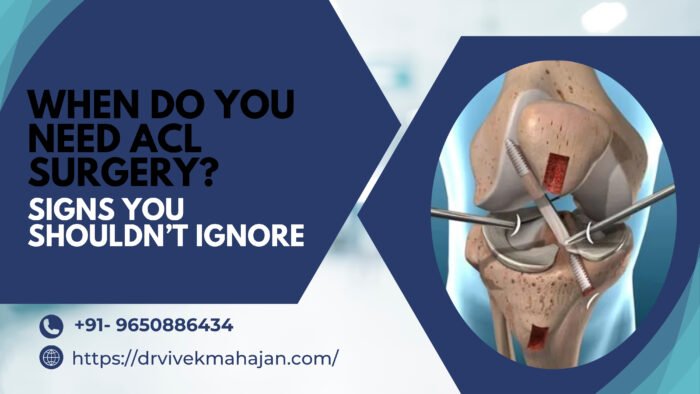
An anterior cruciate ligament (ACL) injury can be life-altering. For athletes, weekend warriors, or even those navigating daily activities, a torn ACL can cause sudden pain, instability, and fear of further injury. Dr. Vivek Mahajan, a renowned orthopedic specialist, has spent years restoring knee function, helping patients regain confidence and mobility. Recognizing the signs you need ACL surgery early can mean the difference between a smooth recovery and long-term joint problems.
The “Buckling” Effect: Knee Instability You Can’t Ignore
One of the earliest and most telling symptoms of an ACL tear is the sensation of your knee giving way or buckling unexpectedly. This instability occurs because the ACL is crucial for stabilizing the knee during pivoting, twisting, or sudden stops. Patients often ask, “Do I need ACL surgery?” The answer often depends on how frequently the knee gives way and whether daily activities or sports are affected.
Persistent buckling is a primary indication for ACL surgery, as leaving it untreated can increase the risk of further damage, including meniscus tears or cartilage injury.
Beyond the Initial Pop: Chronic Symptoms That Signal Surgery
Many patients report hearing or feeling a “pop” at the moment of injury. However, the long-term symptoms often provide clearer guidance. Key symptoms that require ACL surgery include:
- Persistent swelling or recurrent swelling after activity
- Locking or catching of the knee during movement
- Inability to return to pivoting sports or high-impact activities
- Chronic discomfort or pain during routine movements
These signs, medically referred to as ACL tear surgery indications, suggest that conservative management alone may not suffice, and surgical intervention is necessary to restore stability and prevent degeneration.
Conservative vs. Surgical: When Physical Therapy Isn’t Enough
Not every ACL injury requires surgery. Some partial tears or patients with low activity demands may benefit from targeted physical therapy and strengthening exercises. However, surgery becomes essential when:
- The knee frequently gives way or feels unstable
- There is associated meniscus or ligament damage
- Repeated episodes of swelling hinder daily activities or sports
- Long-term joint health is at risk, particularly osteoarthritis development
ACL reconstruction surgery aims to restore the ligament’s function, protect other knee structures, and allow safe return to activity. Consulting a specialist like Dr. Vivek Mahajan ensures the right decision is made based on your activity level, injury severity, and overall knee health.
The Diagnostic Process: Confirming the Need for Surgery
Determining when is ACL surgery necessary begins with a clinical evaluation. Orthopedic specialists perform tests such as the Lachman test and pivot-shift test to assess ligament integrity.
Advanced imaging, particularly MRI scans, confirms the extent of the tear, evaluates associated injuries, and helps plan surgical reconstruction if required. Asking “Do I need ACL surgery?” is best answered after a detailed clinical and radiological assessment by a qualified orthopedic surgeon.
Why Delaying ACL Surgery Can Be Risky
Ignoring the signs you need ACL surgery or delaying treatment can lead to:
- Increased risk of secondary meniscus tears
- Early onset osteoarthritis
- Persistent knee instability affecting daily life and sports
- Reduced long-term knee function
Early recognition and timely consultation can prevent these complications. If you notice any symptoms, seeking professional evaluation is crucial.
Call to Action
If you experience knee instability, recurrent swelling, or difficulty returning to your normal activities, consult Dr. Vivek Mahajan, a specialist in ACL reconstruction in Delhi. Recognizing the signs you need ACL surgery early can restore your knee’s stability and protect long-term joint health. Book your consultation with Dr. Vivek Mahajan in Delhi today and take the first step toward a safe, confident recovery.
FAQs
1. Can an ACL tear heal without surgery?
Partial tears with low activity demands may improve with physiotherapy, but complete tears causing instability typically require surgery.
2. How long can I wait before getting ACL surgery?
Delaying surgery increases the risk of meniscus damage and arthritis. Early evaluation ensures better outcomes.
3. What happens if I ignore signs of an ACL tear?
Ignoring instability can lead to chronic knee pain, recurrent injuries, and early joint degeneration.
4. Is surgery necessary for a partial ACL tear?
Not always. Decision depends on activity level, knee stability, and associated injuries, best assessed by an orthopedic specialist.