
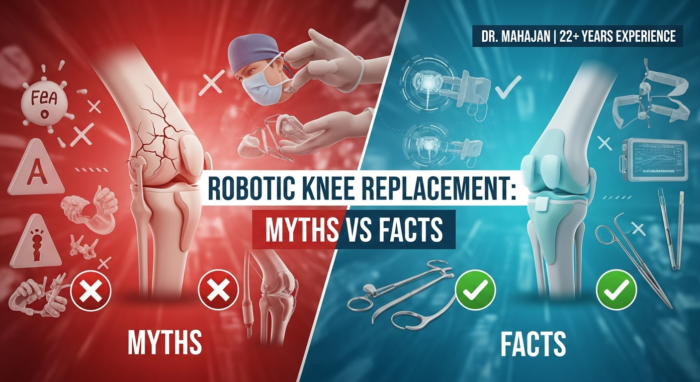
Knee pain caused by arthritis or joint degeneration can significantly affect daily life. With advancements in orthopedic technology, robotic knee replacement surgery has emerged as a precise and effective solution. However, despite its growing popularity, many patients still hesitate due to myths and misinformation.
With 22+ years of orthopedic experience, Dr. Vivek Mahajan has treated thousands of knee arthritis patients and often encounters confusion around robotic-assisted procedures. This blog clears the air by separating myths from medical facts, helping you make an informed decision with confidence.
What Is Robotic Knee Replacement Surgery?
Robotic knee replacement surgery is an advanced form of knee replacement where a robotic-assisted system helps the surgeon plan and perform the procedure with high precision.
The robot does not operate independently. Instead, it assists the surgeon by:
- Creating a 3D map of the knee joint
- Ensuring accurate implant placement
- Maintaining proper alignment and balance
This technology allows the surgery to be customized according to each patient’s unique anatomy, improving outcomes and recovery.
Common Myths About Robotic Knee Replacement Surgery
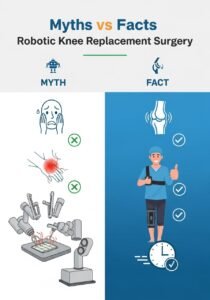
Myth 1: The Robot Performs the Surgery on Its Own
Fact:
The robot does not replace the surgeon. Robotic knee replacement surgery is entirely surgeon-controlled. The robotic system only assists by providing real-time data and precision guidance. The surgeon makes every critical decision.
Myth 2: Robotic Knee Replacement Is Unsafe
Fact:
Robotic-assisted knee replacement is safe and well-established. It enhances accuracy and reduces the chances of implant misalignment. When performed by an experienced orthopedic surgeon, complication rates are comparable—or even lower—than traditional surgery.
Myth 3: Robotic Knee Replacement Is Only for Younger Patients
Fact:
Age alone does not determine eligibility. Patients in their 60s, 70s, and even older can benefit from robotic knee replacement surgery, provided they are medically fit. The decision depends on joint condition, bone quality, and overall health.
Myth 4: Recovery Takes Longer Than Traditional Surgery
Fact:
In many cases, recovery is faster due to:
- Minimal soft tissue damage
- Better implant positioning
- Reduced post-operative pain
Most patients begin walking within a day and experience quicker functional improvement
Myth 5: Robotic Knee Replacement Guarantees Zero Pain
Fact:
While pain is significantly reduced compared to conventional methods, no surgery is completely pain-free. However, robotic knee replacement surgery often results in better pain control and smoother rehabilitation.
Medical Facts Explained by an Orthopedic Expert
Fact 1: Precision Improves Long-Term Results
Robotic systems help achieve accurate implant alignment, which plays a major role in:
- Implant longevity
- Natural knee movement
- Reduced wear and tear
This precision is especially beneficial in complex or severe arthritis cases.
Fact 2: Surgery Is Personalized for Each Patient
Unlike conventional methods that rely on standard measurements, robotic knee replacement surgery is planned based on individual knee anatomy, resulting in a more natural-feeling joint.
Fact 3: Surgeon Experience Still Matters the Most
Technology enhances results, but experience determines success. Dr. Vivek Mahajan’s 22+ years of clinical expertise ensure that robotic tools are used effectively and safely for optimal outcomes.
Who Should Consider Robotic Knee Replacement Surgery?
You may be a suitable candidate if you experience:
- Severe knee pain limiting daily activities
- Advanced osteoarthritis
- Knee deformity or stiffness
- Poor results from medications or injections
- Difficulty walking or climbing stairs
A detailed clinical evaluation is essential before recommending surgery.
When Robotic Knee Replacement Surgery May NOT Be Recommended
Robotic knee replacement may not be suitable for:
- Active infections
- Severe medical conditions affecting surgery safety
- Certain bone deformities not compatible with robotic systems
An honest discussion with an experienced orthopedic surgeon ensures the right treatment choice, not just the latest technology.
FAQs About Robotic Knee Replacement Surgery
Is robotic knee replacement surgery safe?
Yes, when performed by a trained orthopedic surgeon, it is safe and widely practiced.
Does a robot perform knee replacement surgery?
No. The surgeon performs the surgery; the robot only assists with precision and planning.
Is robotic knee replacement better than traditional surgery?
For many patients, it offers improved accuracy, faster recovery, and better knee function.
How long does recovery take?
Most patients resume normal activities within 4–6 weeks, depending on health and rehabilitation.
Conclusion: Making an Informed Decision
Myths often prevent patients from exploring effective treatment options. Robotic knee replacement surgery, when performed by an experienced orthopedic surgeon like Dr. Vivek Mahajan, offers precision, safety, and improved long-term outcomes.
If knee pain is affecting your quality of life, don’t rely on assumptions or hearsay. Seek expert guidance, understand the facts, and choose what’s right for your health.